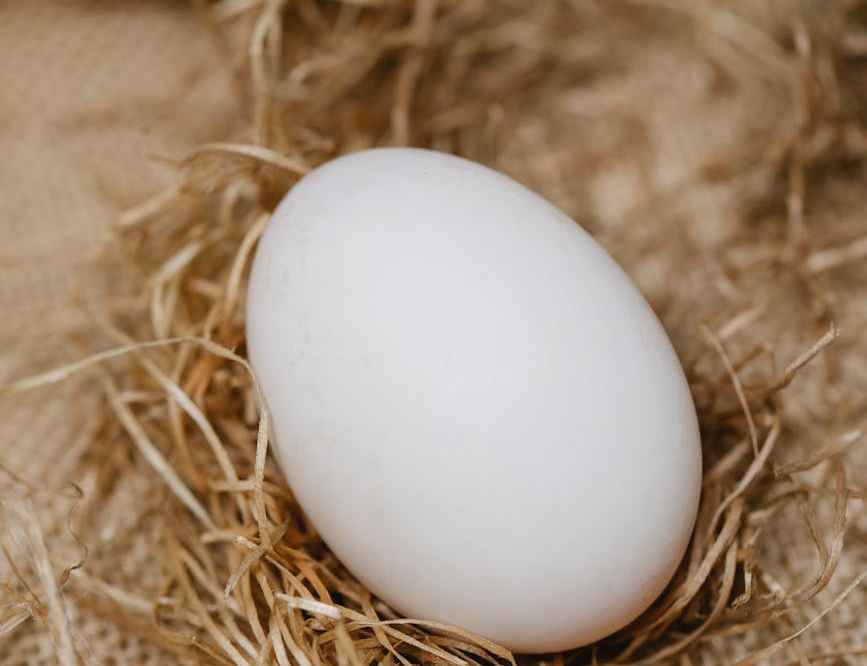
This post is presented with an audio version to emphasize what inspired it.
I just had a thought. Bear with me here…
I recently started a physically active job. My muscles are coming back big time. I’m getting into the best shape of my life. And because of my early hours, my voice is getting deeper. I’m getting a chest voice like I haven’t had in years.
And lately I’ve been embracing my nonbinary identity, so I don’t mind my deepening voice. I’ve never had a problem with my muscles. Or other things. So shortly after getting home from work today (at one PM, after an eight hour shift), I was thinking: I’m not a man, but I’m not exactly a woman either. I’m something new…
And a quote from an old bedtime story came to mind;
“It’s something brand-new: It’s an elephant bird!”
In the story, a lazy bird doesn’t want to sit on her egg, so she convinces Horton the elephant to sit on it for her, which he faithfully does, through storms, a freezing winter, a hot summer, and even after he’s kidnapped, tree and all, and presented at a circus side show. When the bird catches up with him there, the egg starts to hatch, and she wants to take it back, after Horton did all the work of incubating it.
When the egg hatches, it’s not a bird that flies out: “It had ears, and a tail, and a trunk just like his.” After the line about the elephant bird, the story continues: “And it should be, it should be, it should be that way!” Horton dedicated so much to that egg that when it finally hatched, it was fitting that it looked so much like him.
Shifting gears…
When I was very young, my little bird flew away—not because it was too lazy to stick around, but because it simply could not exist in that setting. But my elephant took over, faithfully guarding my egg for many years, weathering many storms, surviving trough frigid winters of my discontent, and being presented before the world as a being who was just wrong.
So when my egg finally hatched, it made sene that I didn’t emerge as the little bird that flew away all those years ago, but as a new being that combines the bird with the elephant that protected me for most of my incubation.
So does that mean…
On the surface, the story appears to be about the justice of receiving a reward for putting in so much hard work, rather than abdicating your responsibility to lie in the sun on Palm Beach. But it goes beyond that.
For a full year, Horton was a stay-at-home mom. Not just a stay-at-home dad, because he was minding a new life, waiting for it to hatch. He was a male elephant doing “women’s work”1 faithfully, even though he was ridiculed for it. At the end of the story, he goes home to raise his offspring as a single parent, something that was very rare when the story was written.
And that offspring wasn’t a bird or an elephant, but a combination of both. Horton didn’t reject the hatchling as a freak, but happily accepted his new child.
Theodore Geisel published Horton Hatches the Egg in June of 1940, almost exactly 85 years ago. Could he have recognized the importance of acknowledging a nonbinary identity when one’s egg cracks late in life? Could the story have been about accepting a child who comes out as nonbinary?
Probably not. But the story works so well that way!
I always loved Horton Hatches the Egg as one of my favorite Dr. Seuss stories. Now I love it even more.
- Yes, I know there are bird species where the male sits on the egg, but the story definitely isn’t a study in comparative ornithology. ↩︎
 I Am Violet